
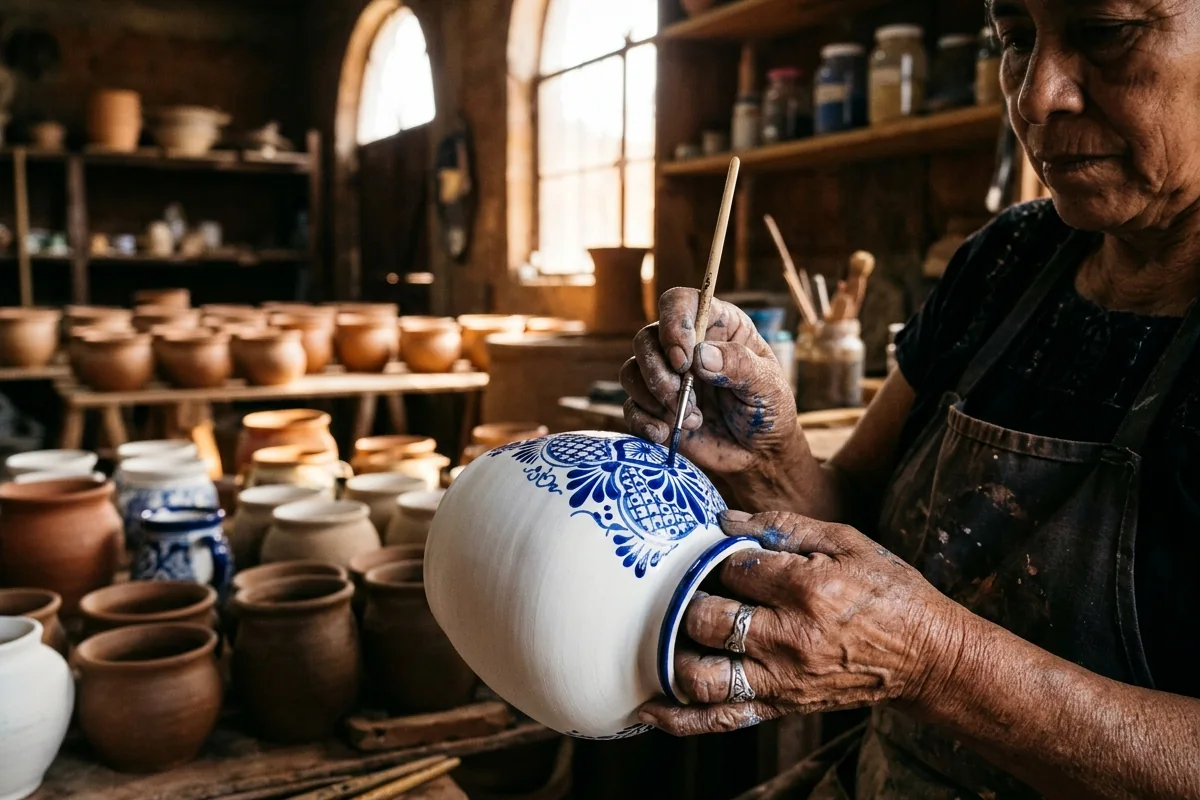
Quick Answer: True certified Talavera de Puebla (DO4) comes strictly from accredited workshops in Puebla and Tlaxcala using two natural local clays, tin-and-lead-free/regulated majolica bath glazing, and only six natural mineral pigments—marked underneath with the workshop signature, Puebla origin, and DO4 registration code. Meanwhile, genuine handmade Mexican majolica from Guanajuato or Jalisco is lawfully sold as Talavera-style or mayólica: both feature raised 3D brushstrokes and an unglazed terracotta foot ring, unlike flat screen-printed porcelain imports.
| Editor’s Pick | Why We Recommend It | Availability |
|---|---|---|
| #1 Puebla-Tradition VaseClassic Hand-Painted Talavera Amphora Vase | Raised Mineral Brushwork · Creamy Glaze | Check Amazon ↗ |
| #1 Hand-Painted PlatesMexican Talavera Dinner Plate Set | Freehand Cobalt & Marigold Relief | Check Amazon ↗ |
| #1 Table PitcherArtisan Hand-Painted Agua Fresca Pitcher | Full-Coverage Floral Latticework | Check Amazon ↗ |
Certified DO4 Talavera vs. Handmade Mexican Majolica vs. Factory Fakes
In 1995 (and recognized by UNESCO as Intangible Cultural Heritage in 2019), Mexico established Denominación de Origen 4 (DO4)—protecting the word Talavera much like Champagne in France or Tequila in Jalisco. Only certified workshops in designated zones of Puebla (Atlixco, Cholula, Puebla City, Tecali) and San Pablo del Monte, Tlaxcala that pass laboratory testing by the Consejo Regulador de la Talavera (CRT) may stamp official DO4 holograms.
Does that mean colorful hand-painted pottery from Dolores Hidalgo (Guanajuato) or Tonalá (Jalisco) is “fake”? Not at all—those towns employ generations-old master painters producing gorgeous handmade Mexican majolica at accessible everyday prices. The real enemy for U.S. shoppers is mass-manufactured transfer-decal porcelain shipped from overseas factories pretending to be Mexican craft.
5 Hands-On Tests to Verify Authentic Hand-Painted Craft
1. The Closed-Eyes Fingertip Relief Test
Authentic Mexican mineral pigments are ground from stone oxides and applied thick with mule- or squirrel-hair brushes over unfired white base glaze. When fired, cobalt blue and marigold strokes fuse into palpable raised droplets and ridges. If a plate feels glass-flat like a dinner-diner coffee mug—or if you see tiny CMYK halftone dots under phone zoom—it’s a printed decal.
2. Milky Cream Tin Glaze (Never Bleach-White)
Mass-market porcelain looks cold, clinical bluish-white. Real Mexican earthenware combines dark and light clays dipped into an opaque milky glaze: along scalloped rims and handles, a warm, creamy ivory-pink undertone subtly peeks through.
3. Flip to Inspect the Terracotta Foot Ring
To prevent molten glaze from fusing vessels to kiln shelves, potters wipe the bottom resting ring clean before firing. Turning over genuine Mexican pottery reveals honest red-brown or buff earthenware biscuit—plus hand-brushed maker initials or a DO4 registry number.
4. Count the Traditional 6 Mineral Colors
Strict DO4 Puebla pieces restrict palettes to six historic mineral oxides: cobalt blue, yellow, black, green, orange, and mauve/violet. Everyday Guanajuato majolica joyfully expands that spectrum with bright turquoise, lime, and magenta.
5. Listen for the Clear Kiln Ring
Balance a bowl lightly on your open palm and tap the rim gently with a knuckle. Properly vitrified earthenware emits a clean, bell-like resonance; a dull cardboard thud warns of a hidden hairline firing crack.
Side-by-Side Comparison
| Feature | DO4 Puebla Talavera | Handmade Guanajuato Majolica | Factory Decal Knockoff |
|---|---|---|---|
| Surface Feel | Pronounced 3D mineral relief | Tactile raised freehand strokes | Completely flat / smooth transfer |
| Base Clay | Blended black & white Puebla clays | Red terracotta or buff earthenware | Thin white molded porcelain/melamine |
| Bottom Mark | Workshop mark + DO4 code + hologram | Painted initials or “Hecho en México” | Unmarked or generic sticker |
| Best Use | Heirloom collecting & fine dining | Vibrant daily tableware, tiles & planters | Skip |
Frequently Asked Questions
Why is cobalt-blue-and-white the most famous Talavera combination?
In 16th- and 17th-century New Spain, imported cobalt oxide was the most precious pigment available, inspired by Ming Dynasty blue-and-white porcelains arriving in Acapulco aboard the Manila Galleons.
Are tiny pinholes in the white glaze a defect?
Occasional tiny pinholes (punteado) where natural clay gases escaped through thick tin glaze during firing are normal authenticity markers on handmade Mexican majolica.
How much does certified DO4 Puebla Talavera cost compared to Talavera-style pottery?
Gallery-certified DO4 dinner plates from historic Puebla houses like Uriarte often run three to five times higher per plate than everyday Guanajuato hand-painted majolica, which makes Talavera-style sets ideal for busy family kitchens.
Ready to Compare the Best Handcrafted Options?
Explore our side-by-side glaze, size, and safety breakdown in our flagship buyer’s guide:
6 Best Authentic Mexican Talavera Vases, Pitchers & Centerpieces →