
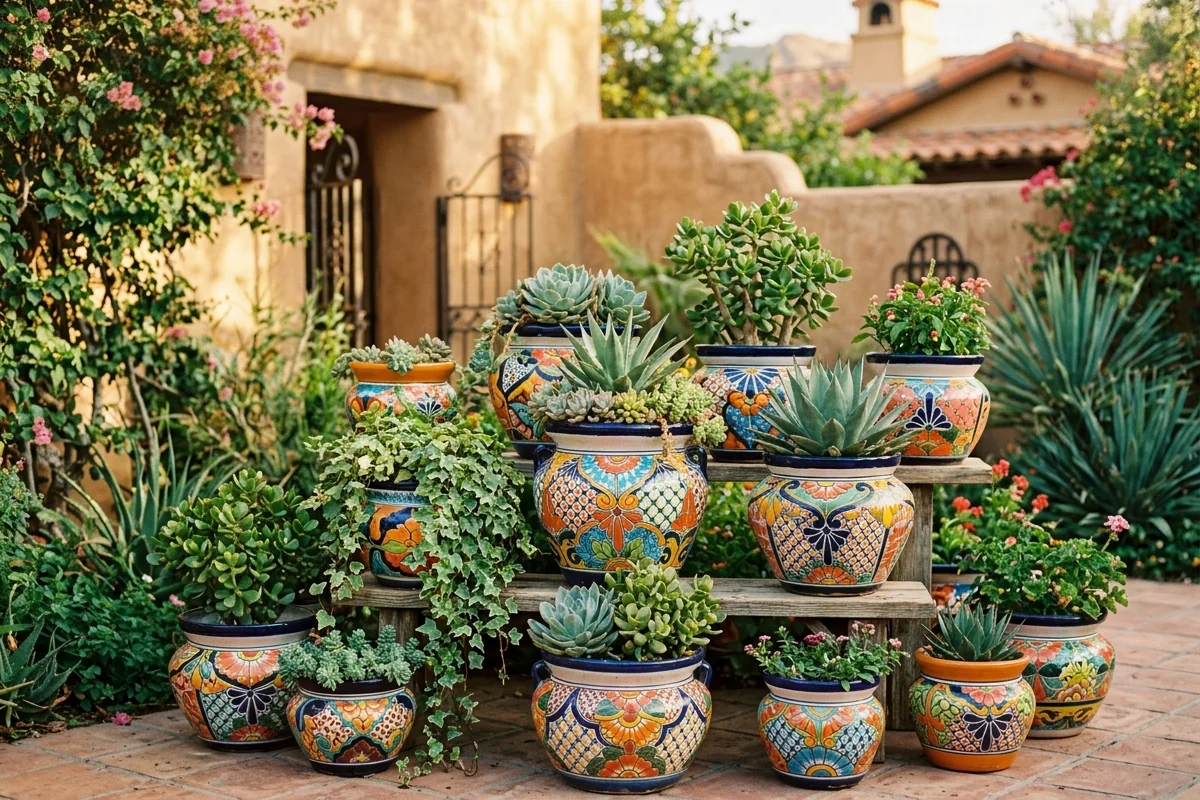
Quick Answer: Chalky, crystalline white crust along the rim or base of a Mexican clay planter is almost always efflorescence (harmless calcium, lime, and fertilizer salts pulled through porous clay by tap water)—not dangerous mold. Empty the pot, brush off loose dry powder with a stiff nylon brush, soak or wipe for 20 minutes with a 1:4 solution of 5% distilled white vinegar and warm water, rinse clean, and sun-dry completely before repotting.
| Editor’s Pick | Why We Recommend It | Availability |
|---|---|---|
| #1 Glazed Courtyard PotAuthentic Talavera Sunflowers Garden Pot | Easy-Wipe Glazed Exterior · Pre-Drilled | Check Amazon ↗ |
| #1 Living Room PlanterEvergreen Hand-Painted Talavera Planter | Glazed Inside & Out · Resists Salt Seepage | Check Amazon ↗ |
| #1 Succulent Herb PotPuebla-Style Talavera Herb & Cactus Pot | Clean Countertop Footprint | Check Amazon ↗ |
Salt Crust vs. Fuzzy Mold: The 5-Second Touch Test
Before grabbing harsh cleaners, check what is actually growing on your pot:
- Mineral Efflorescence (90% of outdoor cases): Feels dry, gritty, chalky, or sandy between your fingers; stays visible even after a sunny 90°F afternoon; concentrates right along the rim waterline and bottom drainage lip.
- Saprophytic Surface Mold (Indoor overwatering): Feels soft, cottony, or slimy; smells faintly earthy/mushroomy; wipes off in a smear with a dry tissue; thrives on shaded north-facing windowsills with poor air circulation.
Safe Cleaning Without Damaging Hand-Painted Glazes
- Brush Dry First: Never wet salt crust first—water pushes dissolved minerals straight back into the terracotta! Take the dry pot outdoors and scrub off 70% of loose white crystals using a dry stiff nylon dish brush (never steel wire brushes, which scratch Talavera glaze).
- Dissolve Remaining Lime with 1:4 White Vinegar: Mix 1 cup of plain 5% distilled white vinegar into 4 cups of warm water. For raw terracotta pots, submerge for 25 minutes until fizzing stops; for planted hand-painted Talavera pots, dip a microfiber cloth in the solution and wipe the affected rim and foot ring gently.
- Flush With Clean Water & Bake in Sunlight: Rinse off dissolved calcium acetate with clean water (distilled or rainwater is ideal) and let the pot dry for 24 hours in direct UV sunlight, which naturally sanitizes any lingering mildew spores.
Why You Should Skip Bleach & Pressure Washers
| Cleaner | Effect on Mexican Pottery |
|---|---|
| 1:4 Distilled White Vinegar | Safe & Effective: Mild acetic acid dissolves alkaline hard-water calcium salts cleanly |
| Chlorine Bleach | Avoid: Leaves sodium salts behind in porous clay that burn delicate plant feeder roots! |
| Gas Pressure Washer | Never Use: High-PSI jets blast underneath tiny glaze crazing lines and strip hand-painted petals |
Frequently Asked Questions
How do I stop white mineral crust from coming back on indoor planters?
Water houseplants with filtered water, collected rainwater, or tap water left out overnight rather than softened water (water softeners swap calcium for sodium, which crusts pots AND harms roots), and flush pots in the sink every 2 months to rinse out excess fertilizer salts.
Why don't fully glazed Talavera pots get as crusty as raw orange terracotta?
Vitreous glaze acts like a raincoat over the clay body, forcing moisture out the top soil surface and bottom drain hole rather than sweating minerals sideways through the wall.
Is white mold on terracotta dangerous to pets or humans?
Common white potting-soil mycelium on damp clay is harmless saprophytic fungus feeding on decaying bark in potting soil—increase room airflow, let the top 2 inches of soil dry between waterings, and wipe the pot rim with diluted vinegar.
Ready to Compare the Best Handcrafted Options?
Explore our side-by-side glaze, size, and safety breakdown in our flagship buyer’s guide: