
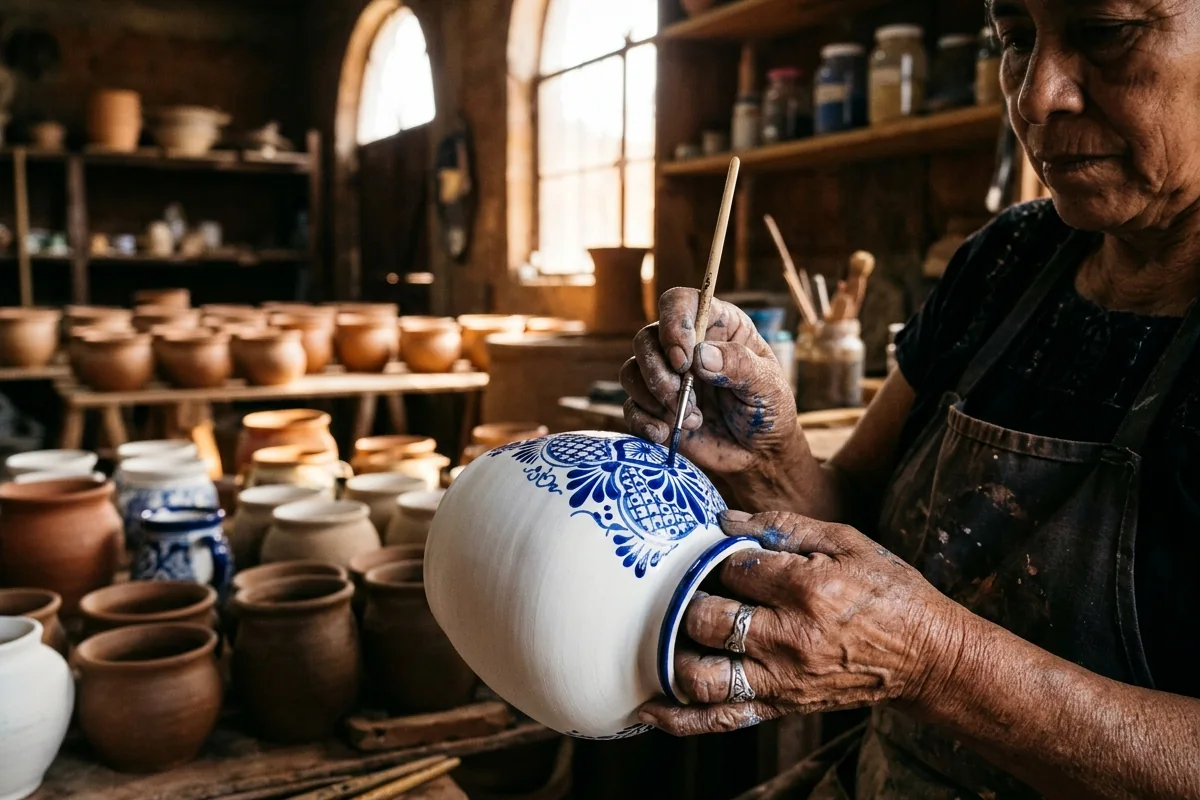
Quick Answer: Mexican pottery isn’t one single style—it spans seven distinct regional ceramic traditions shaped by local geology and pre-Hispanic + colonial fusion: Puebla/Tlaxcala (tin-glazed DO4 Talavera), San Bartolo Coyotepec, Oaxaca (burnished Barro Negro), Tonalá, Jalisco (aromatic burnished & bandera clay), Mata Ortiz, Chihuahua (hair-brush geometric fineware), Capula, Michoacán (dotted punteado & Catrinas), Dolores Hidalgo (colorful everyday majolica), and Izúcar de Matamoros (polychrome Árbol de la Vida).
| Editor’s Pick | Why We Recommend It | Availability |
|---|---|---|
| #1 Puebla/Majolica TraditionHand-Painted Talavera Dinner Plate Set | Vibrant Tin-Glaze Floral Relief | Check Amazon ↗ |
| #1 Oaxacan Black ClayDuelaguetza Florero Ovulo Barro Negro | San Bartolo Coyotepec Quartz Sheen | Check Amazon ↗ |
| #1 Michoacán / Catrina FolkNOVICA Certified Ceramic Catrina Statue | Signed Collector Folk Sculpture | Check Amazon ↗ |
Why Every Mexican State Fires a Different Silhouette
Before highways connected central valleys to northern deserts, every pottery village in Mexico evolved around the exact mineral chemistry of its local riverbed clay—iron-rich red clays in Michoacán, sulfur-free gray earth in Oaxaca, aromatic petatillo clay in Jalisco, and fine white kaolin veins in Chihuahua. Knowing these seven regional signatures turns casual browsing into informed collecting.
The 7 Master Ceramic Regions of Mexico
1. Puebla & San Pablo del Monte (Talavera Poblana)
Born when 16th-century Spanish potters from Talavera de la Reina met Indigenous master formers and Asian porcelain motifs arriving via the Manila Galleon, Puebla Talavera is prized for creamy tin-glazed majolica backgrounds and raised mineral cobalt brushwork.
2. San Bartolo Coyotepec, Oaxaca (Barro Negro)
Formed on hand-balanced Zapotec clay saucers, rubbed with smooth quartz pebbles, pierced with geometric calado cutouts, and reduction-smoked in sealed underground pit kilns to achieve metallic obsidian sheen without paint.
3. Tonalá & Tlaquepaque, Jalisco (Barro Bruñido, Canelo & Petatillo)
Famous for exquisitely dense cross-hatched backgrounds (barro petatillo—often taking weeks to paint around leaping deer and nahuales), cinnamon-scented barro canelo water jugs, and red-white-green barro bandera.
4. Mata Ortiz, Chihuahua (Paquimé Revival Fineware)
Revived single-handedly in the 1970s by master self-taught ceramist Juan Quezada Celado after studying ancient Casas Grandes shards in desert caves, Mata Ortiz pots feature eggshell-thin hand-coiled walls painted using brushes made of a few strands of human hair!
5. Capula, Michoacán (Barro Punteado & La Catrina)
Walk through Capula and you’ll recognize two unmistakable hallmarks: traditional stew pots covered in thousands of tiny white-and-coral slip dots forming lace-like fish and daisies (capulineado), and Mexico’s finest sculpted clay Catrinas.
6. Dolores Hidalgo, Guanajuato (Mayólica cotidiana)
Initiated in the 19th century by Father Miguel Hidalgo to build local economic independence, Dolores Hidalgo workshops produce joyful multi-color 4×4 backsplash tiles, garden planters, and vibrant table majolica.
7. Metepec & Izúcar de Matamoros (Trees of Life / Árboles de la Vida)
Intricately hand-modeled candelabras packed with miniature clay flowers, birds, skeletons, and biblical or harvest scenes—left earthy terracotta in Metepec or painted in dazzling polychrome patterns in Izúcar.
Regional Collector Cheat Sheet
| Region | Signature Visual Clue | Ideal Home Use |
|---|---|---|
| Puebla / Dolores Hidalgo | Milky white glaze + raised cobalt/floral brushwork | Dinnerware, 4×4 kitchen tiles, patio planters |
| Oaxaca (Coyotepec & Atzompa) | Metallic black burnish (Coyotepec) or emerald green glaze (Atzompa) | Sculptural console vases, mezcal copitas |
| Capula, Michoacán | Micro-dotted floral lace (punteado) & detailed Catrinas | Stew ollas, mantel & Day of the Dead displays |
| Mata Ortiz, Chihuahua | Razor-thin geometric lines on polished buff/black clay | Glass-cabinet or pedestal fine-art collecting |
Frequently Asked Questions
What is the green-glazed Mexican pottery seen in Oaxacan markets?
That emerald-green ware comes from Santa María Atzompa, just northwest of Oaxaca City! Modern Atzompa cooperatives now produce certified lead-free green-glazed cazuelas and pitchers alongside playful pastillaje relief jugs.
Which Mexican pottery style is most valuable for collectors?
Signed museum-grade Mata Ortiz vessels by first-generation Quezada family masters, antique 18th/19th-century Puebla tibores, and large signed Tonalá petatillo platters command the highest auction prices.
Can you mix Puebla Talavera and Oaxacan Barro Negro in the same room?
Absolutely—designers love pairing matte/burnished black Oaxacan clay vases on dining consoles right beside cobalt-and-white Talavera plates because the shared handmade geometry ties them together.
Ready to Compare the Best Handcrafted Options?
Explore our side-by-side glaze, size, and safety breakdown in our flagship buyer’s guide:
6 Best Hand-Painted Mexican Ceramic Folk Sculptures & Wall Art →