
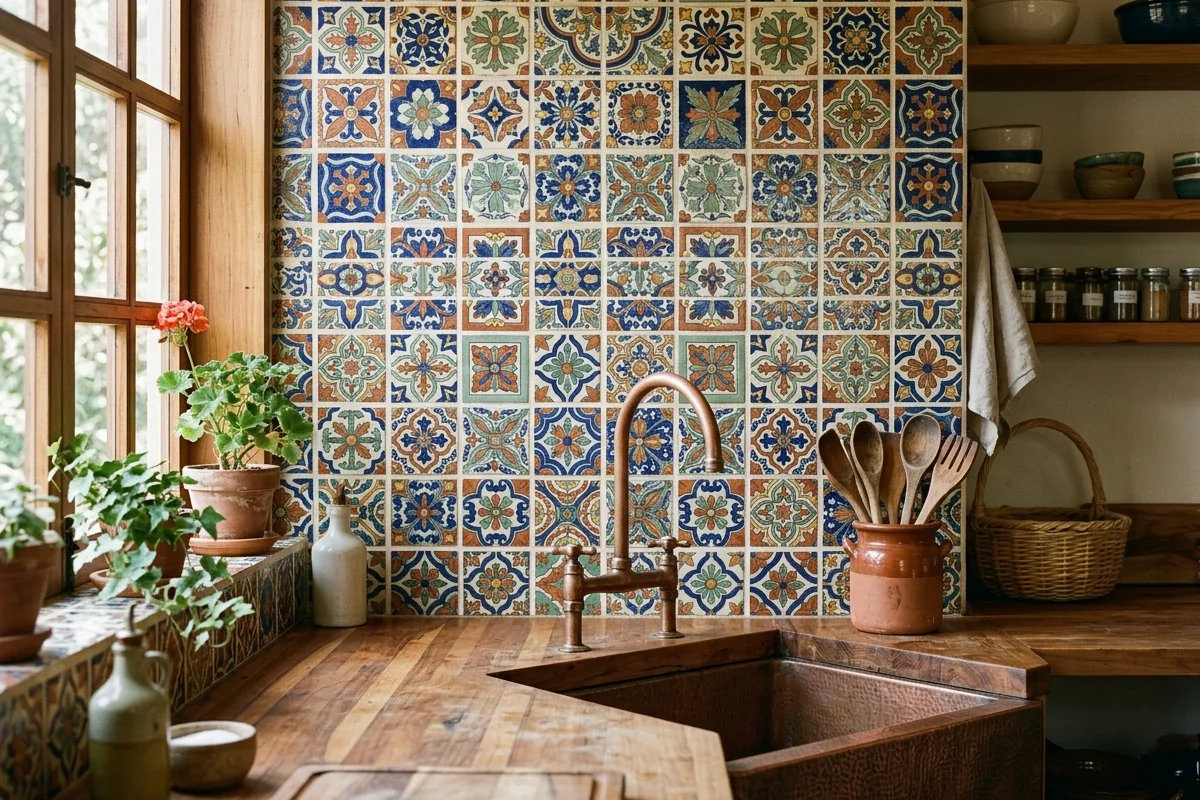
Quick Answer: To make hand-painted Mexican pottery look like an Architectural Digest editorial rather than a crowded souvenir shop, follow the 70/20/10 Negative Space Rule: ground 70% of the space in calm organic neutrals (plaster walls, white oak, unbleached linen, matte stone), layer 20% warm tactile accents (terracotta, brass, woven palm), and let 10% hero Talavera or Barro Negro pieces command uncluttered breathing room.
| Editor’s Pick | Why We Recommend It | Availability |
|---|---|---|
| #1 Stove Counter HeroHeavyweight Hand-Painted Talavera Utensil Crock | Instant Range Focal Point · Holds 12+ Tools | Check Amazon ↗ |
| #1 Layered Table SettingHand-Painted Talavera Dinner Plate Set | Stunning Layered Over Plain White Chargers | Check Amazon ↗ |
| #1 Calm Neutral OptionBrown & White Raised-Relief Talavera Vase | Organic Two-Tone Palette for Minimalist Rooms | Check Amazon ↗ |
1. Layer Patterned Plates with Quiet Linen & Solid Stoneware
You don’t need 24 matching patterned pieces on one table—in fact, mixing solid textures makes hand-painted cobalt and marigold pop twice as hard. Try setting a matte cream stoneware dinner plate at each seat, crowning it with one vibrant hand-painted Talavera salad bowl or scalloped plate, and tying a washed oatmeal linen napkin beside brushed brass flatware.
2. Anchor Kitchen Zones With “Functional Trios”
Instead of scattering twelve tiny trinkets across every foot of countertop, group functional ceramics into one intentional vignette beside your range:
- Tall Vertical Element: A heavy hand-painted Talavera utensil crock filled solely with warm olivewood and walnut spoons (hide neon silicone spatulas in a drawer!).
- Low Horizontal Element: A coordinating cobalt-and-marigold ceramic spoon rest + a small salt cellar.
- Natural Bridge Material: Rest both pieces together on a small oiled butcher-block or travertine tray so the cluster reads as one cohesive composition.
3. Choose Monochrome Talavera for Minimalist Homes
Love contemporary minimalism, Scandinavian oak, or Santa Fe plaster? Skip six-color fiesta mixes and stick strictly to classic Cobalt-and-White, Madrid Charcoal-and-Cream, or Earth-Brown-and-Ivory Talavera paired with matte black Oaxacan Barro Negro vases. Limiting the color story lets the organic hand-painted brushwork shine without visual noise.
Material Pairing Cheat Sheet
| Your Existing Kitchen Palette | Best Mexican Pottery Match | Accent Metals & Textiles |
|---|---|---|
| Warm White + White Oak Cabinets | Classic Cobalt-Blue & White Puebla Talavera | Unlacquered brass, striped cotton kitchen towels |
| Cream Limewash + Butcher Block | Multi-color Floral Talavera + Earthen Ollas de Barro | Hammered copper, woven palm trivets |
| Soapstone / Concrete + Walnut | Oaxacan Barro Negro + Madrid Black/White Tile | Matte black iron, raw Belgian linen |
Frequently Asked Questions
Are open floating wood shelves strong enough to hold stacks of Mexican Talavera plates?
Thick earthenware plates weigh 1.5 to 2 pounds apiece—a stack of 8 dinner plates plus bowls easily tops 20 pounds! Only stack heavy Mexican ceramics on shelves anchored into wall studs with heavy-duty steel brackets.
Can I mix vintage flea-market Mexican pottery with brand-new pieces?
Yes! Mixing a patinaed earthen bean pot beside crisp glossy Talavera bowls gives a kitchen authentic collected-over-time warmth—just reserve untested vintage pieces for fruit or utensils and serve wet meals on certified lead-free ware.
What flowers look best inside multicolored Talavera pitchers?
Single-color botanicals look cleanest against busy floral glazes: try solid green eucalyptus branches, white hydrangeas, yellow billy balls (craspedia), or fresh kitchen rosemary bundles.
Ready to Compare the Best Handcrafted Options?
Explore our side-by-side glaze, size, and safety breakdown in our flagship buyer’s guide:
6 Best Authentic Mexican Talavera Dinnerware Sets & Serving Pieces →