
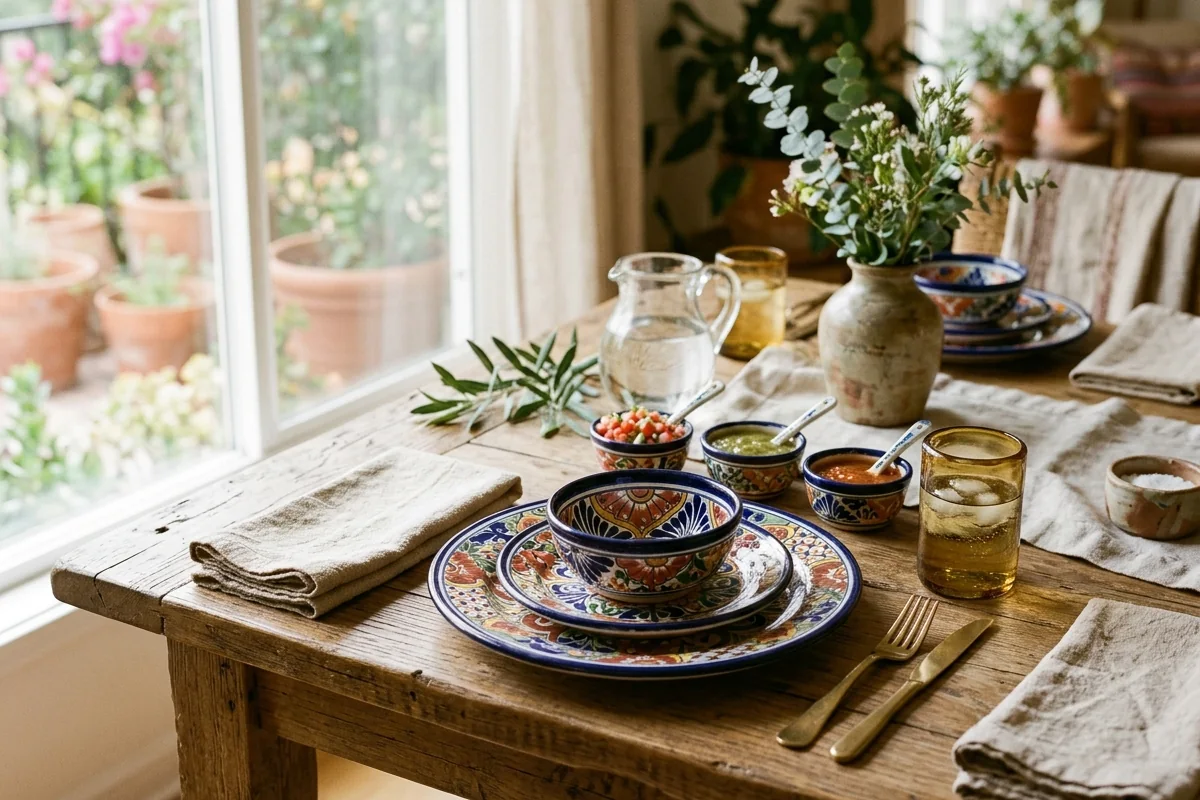
Quick Answer: High-fire ceramic Talavera-style pieces (like modern vitrified tortilla warmers and mugs explicitly stamped microwave/dishwasher safe) handle everyday appliances well, but traditional handmade Mexican earthenware Talavera should NOT be microwaved right after washing and lasts far longer when hand-washed. Moisture absorbed through the unglazed terracotta foot ring flashes to steam in a microwave—superheating handles and causing hairline glaze crazing.
| Editor’s Pick | Why We Recommend It | Availability |
|---|---|---|
| #1 Microwave-Safe PickBico Blue Talavera Ceramic Tortilla Warmer | Vitrified High-Fire Ceramic · Dishwasher Safe | Check Amazon ↗ |
| #1 Hand-Painted PlatesMexican Talavera Dinner Plate Set | Thick Chip-Resistant Rolled Rim | Check Amazon ↗ |
| #1 Daily Coffee MugsHand-Painted Floral Talavera Mugs | Full-Coverage Stain-Resistant Glaze | Check Amazon ↗ |
The Physics Test: Why Some Ceramic Mugs Burn Your Fingers in the Microwave
Have you ever microwaved leftover soup in an artisan Mexican bowl for 90 seconds, pulled it out, and realized the ceramic rim was blistering hot while the soup in the middle was still lukewarm? That isn’t metallic paint sparking—it is trapped water molecules inside porous earthenware.
Unlike porcelain (fired above 2,300°F until completely glass-dense), traditional Mexican Talavera uses low-to-mid-fire earthenware clay that remains slightly absorbent underneath its glossy glaze. Whenever water enters through the unglazed bottom foot ring during washing, microwave energy agitates that internal moisture directly, expanding steam against the rigid outer glaze and creating fine spiderweb lines known as crazing.
The 30-Second Empty-Mug Microwave Safety Test
Unsure whether a specific unmarked mug or bowl in your cabinet is dense stoneware or porous earthenware? Run this simple kitchen check once:
- Place the completely dry, empty plate or mug in the microwave alongside a separate glass measuring cup half-filled with cold water (the water absorbs excess magnetron energy safely).
- Heat on High for 30 seconds.
- Carefully touch the ceramic handle and rim:
- Cool or barely room-warm: The clay body is dense and dry—safe for short reheating bursts.
- Hot to the touch: Moisture or iron-rich earthenware minerals are absorbing microwaves—keep that piece strictly out of the microwave!
Appliance Care Matrix for Mexican Tableware
| Appliance | Traditional Handmade Earthenware Talavera | Modern High-Fire Ceramic Talavera-Style |
|---|---|---|
| Dishwasher | Hand-wash preferred (avoid caustic pods & heated-dry cycles) | Top-rack safe when spaced apart so rims don’t clink |
| Microwave | Avoid—causes handle overheating & glaze crazing | Safe for 1–2 minute reheating |
| Conventional Oven | Warm up to 300°F only if started inside a cold/warm oven | Check maker rating; never place under a 500°F broiler |
| Freezer | Never freeze—moisture expands and pops glaze chips | Refrigerator safe; avoid deep freezing |
Frequently Asked Questions
Does fine spiderweb crazing mean my Talavera plate is ruined?
Light surface crazing over years of use is common in tin-glazed majolica, though deep stained cracks that trap food residue mean it's time to retire that plate from wet dishes to breadbasket or wall display.
Why shouldn't Talavera plates touch each other in a dishwasher rack?
High-pressure spray jets vibrate plates together for 90 minutes, chipping the unglazed foot ring of one plate against the glossy painted rim of its neighbor.
How should I stack hand-painted plates in my cabinet?
Slip inexpensive felt pan protectors, cork rounds, or even coffee filters between stacked hand-painted dinner plates so gritty terracotta foot rings never scuff the cobalt brushwork underneath.
Ready to Compare the Best Handcrafted Options?
Explore our side-by-side glaze, size, and safety breakdown in our flagship buyer’s guide: